
Before Your Teen Tries Off-Road Motorcycling: What Parents Need to Know
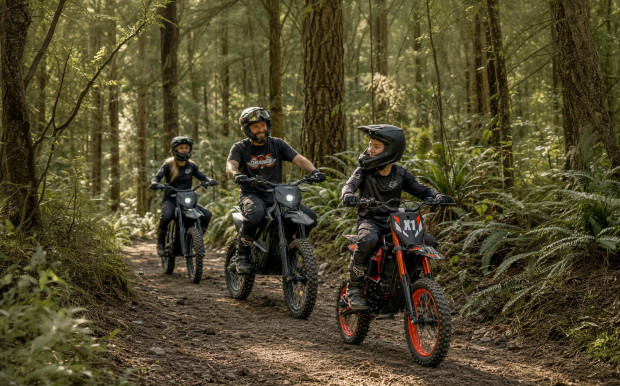
What to Know Before Your Teen Tries Off-Road Motorcycling
Before a teenager tries off-road motorcycling for the first time, parents need to consider three things: whether their child has the coordination and understanding needed to learn, whether the motorcycle is the right size and power for them, and whether they have suitable protective equipment. Once the session begins, the priority should be starting, braking and steering rather than speed or difficult terrain.
If your teenager has never ridden a motorcycle before, an introductory lesson with a qualified instructor is a sensible starting point. It gives them a chance to understand what off-road riding involves while helping parents assess what sort of motorcycle and training they may need in the future.
What Should Teens Know Before Their First Dirt Bike Ride?
Being able to ride a bicycle can help when learning to ride an off-road motorcycle. Your teenager may already understand balance, steering and the importance of looking ahead, but operating a motorbike is quite different.
A conventional bicycle relies mainly on pedalling, while an electric off-road motorcycle uses a throttle to control motor output. Riders need to coordinate acceleration, braking and body position, particularly when loose dirt or uneven ground causes the motorcycle to respond differently from how it would on a smooth surface.
Parents shouldn’t assume that age or cycling experience alone means a teenager is ready. It’s more useful to consider whether they can understand an instructor’s directions, stay focused and respond promptly when asked to release the throttle or apply the brakes.
Before riding, let your teenager familiarise themselves with the throttle, front and rear brakes, and the motorcycle’s starting and stopping controls while it is stationary. An instructor should then determine the appropriate difficulty of the first riding exercises.
For complete beginners, an introductory lesson isn’t simply about getting the motorcycle moving. It’s about developing good control habits before attempting more demanding manoeuvres.
How Can Parents Choose the Right Bike Size and Power?
Motorcycles marketed towards teenagers can differ considerably in seat height, weight and power delivery. Even a lower-powered motorcycle may be difficult to handle if its dimensions don’t suit the rider.
Start by observing how your teenager sits on the bike. Can they reach the handlebars comfortably? Can they operate the brakes without stretching? Can they keep the motorcycle stable when stopping? These details are more useful than selecting a bike based on age alone.
Weight matters, too. Being able to balance a moving motorcycle doesn’t necessarily mean a teenager can comfortably manage it during slow turns, stops or when it begins to lean. For an introductory lesson, the training motorcycle should be selected with an instructor’s guidance to suit the rider’s size and ability.
For teenagers who intend to continue riding after their initial training, comparing different electric dirt bike models can help parents understand which dimensions and power settings may be suitable.
The Qronge X1 Spark L, for example, is an electric dirt bike for teens with a 17-inch front wheel, a 14-inch rear wheel and a minimum seat height of 29 inches. Its recommended rider-height range is 4 feet 7 inches to 6 feet 3 inches. These specifications offer a useful starting point when assessing whether the motorcycle’s dimensions might suit a particular teenager.
The X1 Spark L also features a 4,500W peak mid-drive motor and three riding modes: ECO, Sport and Turbo. ECO offers a more moderate level of performance, while Sport and Turbo provide greater power output. For teenagers who have developed their basic riding skills and want to progress, these settings offer flexibility for continued practice and different off-road conditions.
However, falling within the recommended height range doesn’t automatically mean a rider can manage the motorcycle. At approximately 146 lbs, the X1 Spark L still requires the physical strength and experience needed to control its weight and power.
The aim is not to give a young rider access to more power as quickly as possible. It’s to choose a motorcycle whose dimensions, weight and performance match their developing abilities.
What Protective Gear Should Be Ready Before the First Ride?
Falls, flying stones and impacts are risks that need to be considered in off-road riding. Proper protective equipment should be prepared before the first session, not purchased only after a teenager has learnt to ride.
A suitable helmet is one of the most important items. Choose a motorcycle helmet that meets the relevant safety standards and the requirements of the riding venue. It should fit securely without moving excessively when the rider turns their head. An ordinary bicycle helmet is not a substitute for an approved off-road motorcycle helmet.
Goggles should fit comfortably with the helmet, helping protect the eyes from dust, mud and small stones without restricting visibility.
Motocross boots are designed to provide protection and support around the feet, ankles and lower legs. Unlike ordinary trainers, they offer protection suited to off-road riding. When trying them on, make sure your teenager can still operate the foot controls properly.
Gloves, chest and back protection, and suitable knee and elbow protection are also important. Protective equipment should stay in place as the rider moves without making it difficult to operate the motorcycle.
In the UK, parents should also check the equipment standards that apply to the activity. The Auto-Cycle Union (ACU), for example, sets requirements for helmets, chest and back protection, and riding boots at motocross events.
If the training centre offers equipment hire, confirm exactly what is included and whether suitable sizes are available. Having a complete set of kit is only useful when everything fits correctly and meets the relevant requirements.
What Should Teens Practise on Their First Ride?
A first lesson doesn’t need a challenging route. A relatively flat training area with clear visibility allows beginners to concentrate on controlling the motorcycle.
- Start with moving off smoothly. Your teenager needs to understand how throttle input affects acceleration. The aim is to apply power gradually rather than opening the throttle suddenly, while maintaining a stable riding position and following the instructor’s guidance.
- Then practise slowing down and stopping. Knowing where the brakes are is only the beginning. Riders need to learn how to reduce speed smoothly and bring the motorcycle to a controlled stop. Being able to stop when instructed is an important foundation for further training.
- Finally, work on low-speed turns. Once starting and stopping become more consistent, teenagers can begin simple turning exercises under supervision. These help them learn where to look, how to manage speed and how to adjust their body position.
The three skills are closely connected. Poor throttle control makes it harder to maintain a steady speed. Uncertain braking affects how a rider approaches a corner. Looking down at the front wheel instead of ahead can also make it harder to judge the route.
There’s no need to move straight on to steep slopes, muddy sections or jumps during the first session. Being able to start smoothly, slow down, stop and complete simple turns consistently is more useful than covering a longer distance.
If your teenager becomes visibly tired, anxious or repeatedly makes control errors, they should take a break while the instructor assesses whether the session should continue.
How Should Parents Decide What Comes Next?
After the first session, ask your teenager what they actually thought of riding. Did they enjoy controlling the motorcycle? Which skills felt comfortable? What did they find difficult?
Their ability to manage the basics, along with their willingness to keep learning, matters more than how fast they rode on the day.
If they’re keen to continue, the instructor’s feedback can help guide further lessons and identify suitable motorcycle dimensions and power settings. Thinking about buying their own electric dirt bike at that stage is more useful than making a decision based on appearance or performance figures alone.
Before purchasing, parents should also check warranty terms, maintenance requirements and battery charging instructions. For teenagers intending to ride regularly, having a motorcycle they can manage and maintain appropriately is an important part of the overall experience.
If their basic control skills still need work, continuing to practise on a suitable training motorcycle makes more sense than rushing towards greater power or more challenging terrain.
Preparing for a teenager’s first off-road motorcycle ride isn’t about finding the fastest bike. It’s about making sure the rider, motorcycle, protective equipment and training all work together. With those foundations in place, young riders can begin turning their interest into practical riding skills and make a more informed choice when the time comes to consider their own motorcycle.
Also Read: The Ultimate Parents Guide to the Best Scooters for Teens
Guest Article.
Related Posts


About The Author

A Mum Reviews
This blog is edited by a mum with over 15 years of professional childcare experience. Now over a decade into motherhood and still enthusiastic about finding great products and helpful solutions for busy families to make life more fun and easier too.