
Getting More From Your Garden in Every Season
Getting More From Your Garden in Every Season
Most of us spend the first warm weekend of spring in the garden, then barely step outside once the evenings turn cold. That leaves a lot of outdoor space sitting empty for months. The good news is that a few practical changes can make it useful in every season, not just the summer.
Why Most Gardens Sit Unused for Half the Year
Each season asks something different of an outdoor space. Spring can be unpredictable, with bright days followed by sharp showers. Summer may be too hot and bright to sit in comfortably. Autumn brings wet grass and early darkness, and winter adds frost and cold.
The table below shows how a garden might be used across the year, along with one simple change for each season.
| Season | How the Garden Gets Used | One Change to Consider |
| Spring | Morning coffee and early weeding | A covered bench that stays dry after rain |
| Summer | Long afternoons and evening meals | Shade from a pergola or parasol |
| Autumn | Shorter days and damp weather | Lighting along paths and seating |
| Winter | Short walks and fresh air | Outdoor heating and a sheltered seat |
Build Shelter Into the Garden
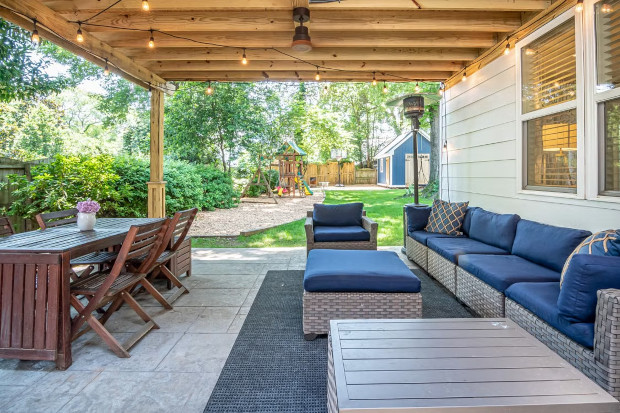
Shelter often makes the biggest difference between a garden you use and one you avoid. Covered seating, a pergola with a solid or slatted roof, or a simple canopy can keep rain off furniture and give you a dry place to sit.
A few habits help:
- Choose furniture that copes with damp, such as aluminium, resin wicker or treated hardwood.
- Store cushions in a dry box or indoors when they are not in use.
- Cover tables and chairs during wet spells, and check the covers after windy weather.
Water also needs somewhere to go. Our guide to how green roofs manage heavy rainfall explains how surface water is handled in towns and cities, which may help when you plan drainage for a hard patio.
Make Evenings and Cold Days More Comfortable
Lighting is one of the simplest ways to extend the day. Low-voltage and solar lights are easy to fit and can pick out paths, steps or a favourite tree. Keep the light soft and pointed downwards so it does not shine into neighbours’ windows.
Outdoor heating can make a cool evening far more pleasant. Patio heaters come in electric and gas models, and each has different running costs and installation needs. Follow the manufacturer’s instructions closely. Use gas heaters only outdoors in a well-ventilated space, keep them clear of canopies and fabric, and never use a barbecue or indoor heater in an enclosed area. A qualified electrician should connect any mains supply.
Before you buy, check how much energy a heater uses and how often you expect to use it. A few occasional evenings may suit one option, while regular use may suit another. More practical tips for fitting lights and fixtures are in the DIY section.
Set Up a Sheltered Spot for Outdoor Dining
Outdoor meals work best when the seating sits close to the house, so plates and drinks are easy to carry. Place the table where the wind is weaker, perhaps beside a wall or fence. A screen or a row of tall planters can cut a cold breeze.
Small touches make a real difference. A weatherproof table, a few blankets on a bench and a lantern or small heater can turn a chilly lunch into a relaxed evening.
Add Features for Relaxing Beyond Summer
Some garden additions are designed for cooler months. Hot tubs and swim spas are popular examples, but they raise practical questions worth settling before you commit.
Start with the site. The base needs to be level and firm, with easy access to a suitable power supply. A qualified electrician should install the connection, usually with a residual current device (RCD) for safety. Privacy screening and a sturdy, lockable cover help, especially if children visit.
Maintenance matters as much as the purchase price. Water needs regular testing and treatment, and keeping the cover closed when the tub is not in use reduces heat loss and running costs. Ask about servicing and warranty terms too.
Companies such as halcyonwellness.co.uk supply hot tubs and swim spas, so it is worth asking them about running costs, covers and aftercare before you decide.
Giving the Garden a Reason to Be Used All Year
A garden does not need a large budget to earn its keep in winter. Start with one change, such as a covered seat or a few lights along the path, and see how often you use it. Over time, small improvements add up to a space you want to step into in every season.
That first warm weekend of spring can feel like the start of something. With a little planning, it can be the start of a garden that works all year.
Guest Article.
Related Posts


About The Author

A Mum Reviews
This blog is edited by a mum with over 15 years of professional childcare experience. Now over a decade into motherhood and still enthusiastic about finding great products and helpful solutions for busy families to make life more fun and easier too.