
Blackout Blinds for the Nursery: How to Get a Baby’s Room Properly Dark
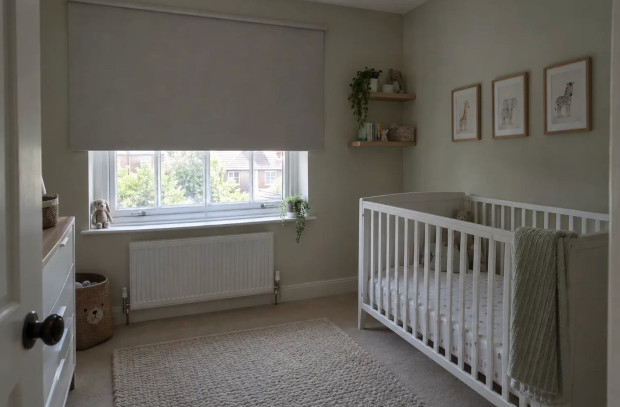
Image: Impress Blinds
How to Get a Baby’s Room Properly Dark with Blackout Blinds
If your baby is up and chatting at the cot bars before five on a June morning, you are far from alone. Long summer days are lovely, but they can play havoc with little sleepers, and a nursery that looks dark at bedtime can be surprisingly bright by dawn.
The good news is that getting a baby’s room properly dark is one of the easier sleep fixes to sort. It just takes a bit more thought than hanging any old blind and hoping for the best.
Why a Dark Room Helps Babies Sleep
Light is one of the strongest signals the body has that it is time to be awake. Babies are still learning the difference between night and day, and a room that stays light past seven in the evening and brightens again at half four does not make that job any easier. Naps matter too. Most babies nap in full daylight, and a dim, calm room helps them settle quicker and stay asleep for longer.
Where the Light Gets In
Plenty of parents buy a blackout blind, fit it, and then find the room is still nowhere near dark. Usually the fabric is not to blame. A blind fitted inside the window recess needs a small gap at each side so it can move freely, and on a sunny morning those gaps glow like a picture frame. Light also creeps over the top of the roller and under the door from the landing.
A quick way to find the leaks is to stand in the nursery early on a bright morning with the door closed and the blind down. Give your eyes a minute to adjust, and the problem areas will show up straight away.
Choosing the Right Blackout Blind
Start with the fabric. Proper blackout blinds have a coating or lining on the back that stops light passing through, whatever colour the front is. That means a pale grey or a pretty print works just as well as navy, as long as the backing is blackout. If you can, order a sample and hold it up to a sunny window to see for yourself.
Next, think about the fit. Where the window allows, fitting the blind outside the recess so it overlaps the frame by a few centimetres on every side blocks far more light. Mounting it a little higher than the window helps with the glow over the top, too. Roller styles tend to sit flatter than Roman blinds and leave smaller gaps.
Cord Safety in the Nursery
Looped blind cords are a real risk for babies and young children. Since 2014, new blinds sold in the UK have had to meet the child safety standard BS EN 13120, which means built-in safety devices. Older blinds in a house you have moved into may not have them, so it is worth checking every window, not just the nursery.
For a baby’s room, the simplest answer is no cords at all. Cordless and spring-loaded designs both work well, and perfect fit blinds go a step further. They clip onto the window frame itself, so there is nothing to drill and nothing to dangle, and the close fit cuts the light gaps at the edges too. Whatever you choose, keep the cot well away from the window.
Curtains, Small Lights and Temperature
For the darkest possible room, layering is the trick. Blackout curtains on a pole that extends past the window catch any light that sneaks round the blind, and a draught excluder at the bottom of the door stops landing light spilling in while older siblings are still up.
It is worth checking the small things too: the standby light on the baby monitor, a phone charger, or a night light brighter than it needs to be. A strip of tape or a dimmer bulb sorts these in minutes.
Dark rooms can get warm, especially south-facing ones in summer. The Lullaby Trust recommends keeping a baby’s room between 16 and 20°C, so a simple room thermometer is a good buy. Thermal blackout fabrics help here, keeping the sun’s heat out in summer and holding warmth in during winter.
A Quick Nursery Blackout Checklist
- Blackout-backed fabric, tested against a sunny window
- An outside-the-recess fit or a close-fitting frame
- No cords, or proper safety devices on any that remain
- Blackout curtains layered over the top
- Standby lights covered and the room at 16 to 20°C
Summary
A properly dark nursery comes down to the right fabric, a fit that leaves no gaps, and a few small extras to catch the light that sneaks in elsewhere. Nursery windows are not always a standard size, especially in older houses with deep sills, so it pays to have them measured properly. Most areas have local fitters who will do this for you. If you live in West Yorkshire, for example, blind fitters in Leeds can measure the window and fit a blind made to its exact size.
The best time to sort it is before the baby arrives, or at least before the clocks go forward in March and the light mornings return. Get those basics right and the sun, at least, will not be the one waking everyone up.
Guest Article.
Related Posts


About The Author

A Mum Reviews
This blog is edited by a mum with over 15 years of professional childcare experience. Now over a decade into motherhood and still enthusiastic about finding great products and helpful solutions for busy families to make life more fun and easier too.